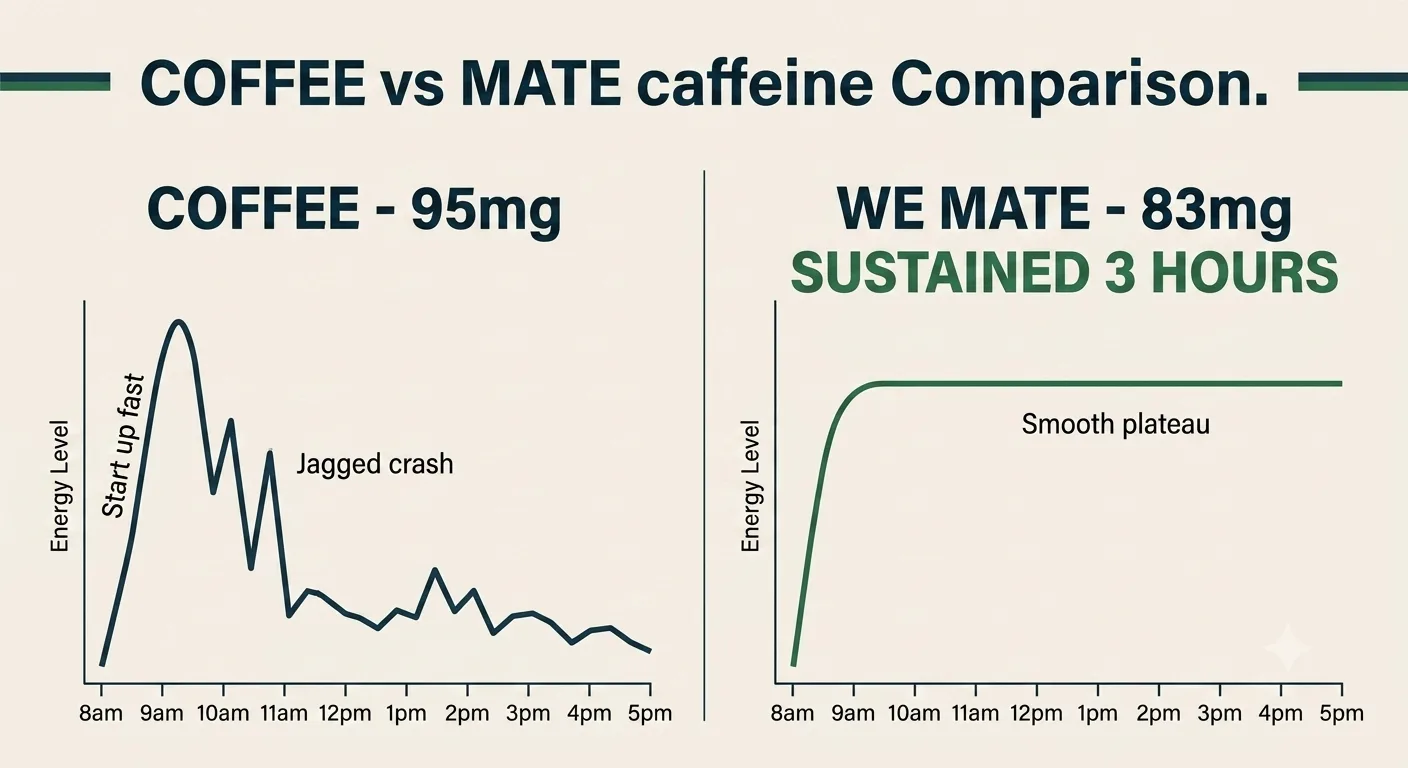
A 330 ml can of We Mate contains less caffeine than a cup of coffee and more than a cup of tea: a moderate, everyday amount that gives you a real lift without tipping into "too much." We are finalising the analysis with our producer and will publish the exact per-can figure here once it is confirmed.
Yerba mate vs coffee, tea and energy drinks
Here's how a serving ranks, most caffeine to least:
- Filter coffee (cup) - the strongest
- Espresso (single shot)
- Black tea (cup)
- Cola (330 ml)
- Green tea (cup) - the mildest
So a can of We Mate sits between tea and coffee - enough to feel it, not enough to leave you wired.
Why mate's caffeine feels different
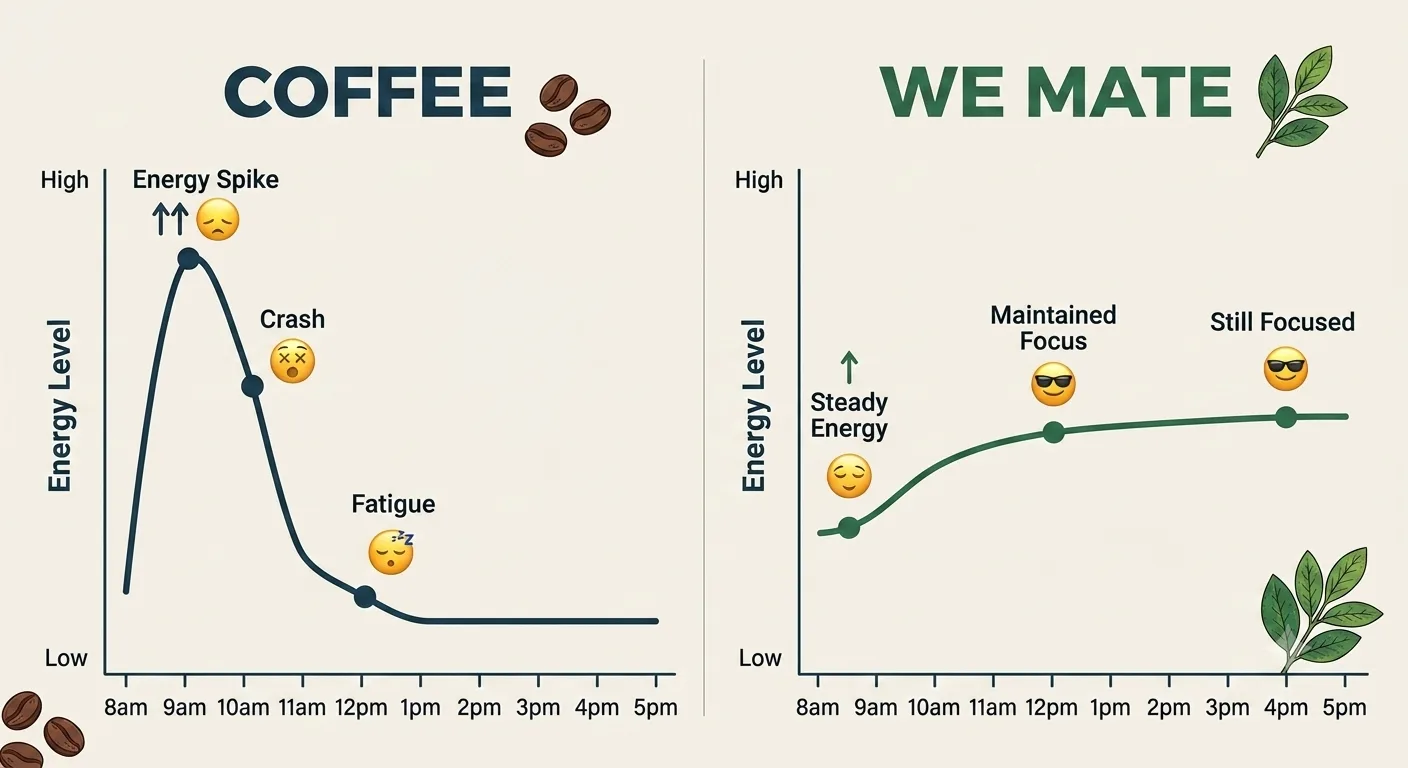
Yerba mate doesn't just deliver caffeine. It also contains theobromine, the mild, longer-acting stimulant found in cacao. Many people describe the combination as a smoother, steadier lift than coffee - less of a sudden spike followed by a crash. Pair that with the fact that We Mate has less sugar than sugary soft drinks, and there's much less of a sugar dip to ride out.
How much caffeine is safe?
European food-safety guidance (EFSA) considers up to 400 mg of caffeine a day from all sources safe for most healthy adults, and single doses up to 200 mg unlikely to be a concern. Pregnant and breastfeeding people are advised to stay under 200 mg a day. We Mate leaves you plenty of room within that guidance - but count all your sources (coffee, tea, chocolate) across the day.
When to drink it
Because the lift is steady rather than sharp, mate is a great mid-morning or afternoon pick-me-up - the classic "Espresso at 9am, We Mate at 3pm." If you're sensitive to caffeine, keep it earlier in the day.
FAQ
Does yerba mate have more caffeine than coffee? Usually a little less per serving: a can of We Mate sits below a cup of filter coffee.
Does yerba mate have a lot of caffeine? No - it's a moderate amount, well within EFSA's daily guidance for most adults.
Does yerba mate cause a crash? Less than sugary soft drinks: with less sugar than most sugary soft drinks and theobromine, the comedown is gentler for most people.