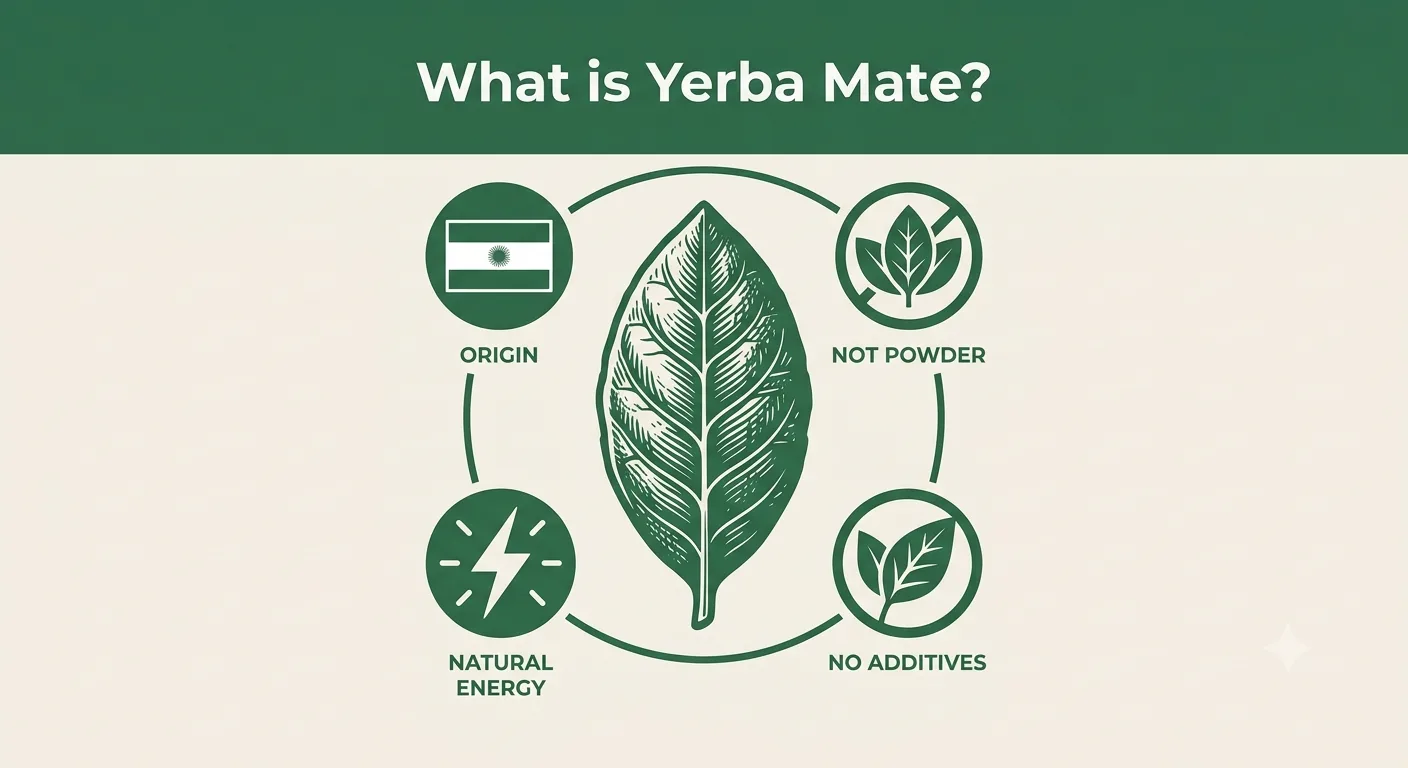
Yerba mate is a traditional South American drink made from the dried leaves of Ilex paraguariensis, a species of holly native to the rainforests of Argentina, Paraguay, Brazil and Uruguay. It's naturally caffeinated, earthy and slightly bitter - think of it as the middle ground between coffee and green tea, with a culture all its own.
For centuries it's been the everyday energy ritual of millions of South Americans. We took that ritual, brewed it hot, chilled it and put it in a can - no artificial sweeteners: brown sugar in Mango and Blueberry, stevia in Citrus and Mint & Ginger.
Where yerba mate comes from
The mate plant grows in the humid, subtropical regions of South America, where Indigenous Guaraní communities drank it long before it became a national habit across the Southern Cone. Today, sharing a mate, brewed in a hollowed gourd and sipped through a metal straw called a bombilla, is a daily social ritual in Argentina, Uruguay, Paraguay and southern Brazil.
What does yerba mate taste like?
Yerba mate tastes green, grassy and earthy, with a pleasant bitterness often described as a cross between green tea and coffee. The flavour softens beautifully when it's chilled and paired with fruit. That’s exactly why We Mate comes in Mint & Ginger, Citrus, Mango & Passion Fruit and Blueberry, with fruit juice in Mango, Blueberry and Citrus.
How much caffeine is in yerba mate?
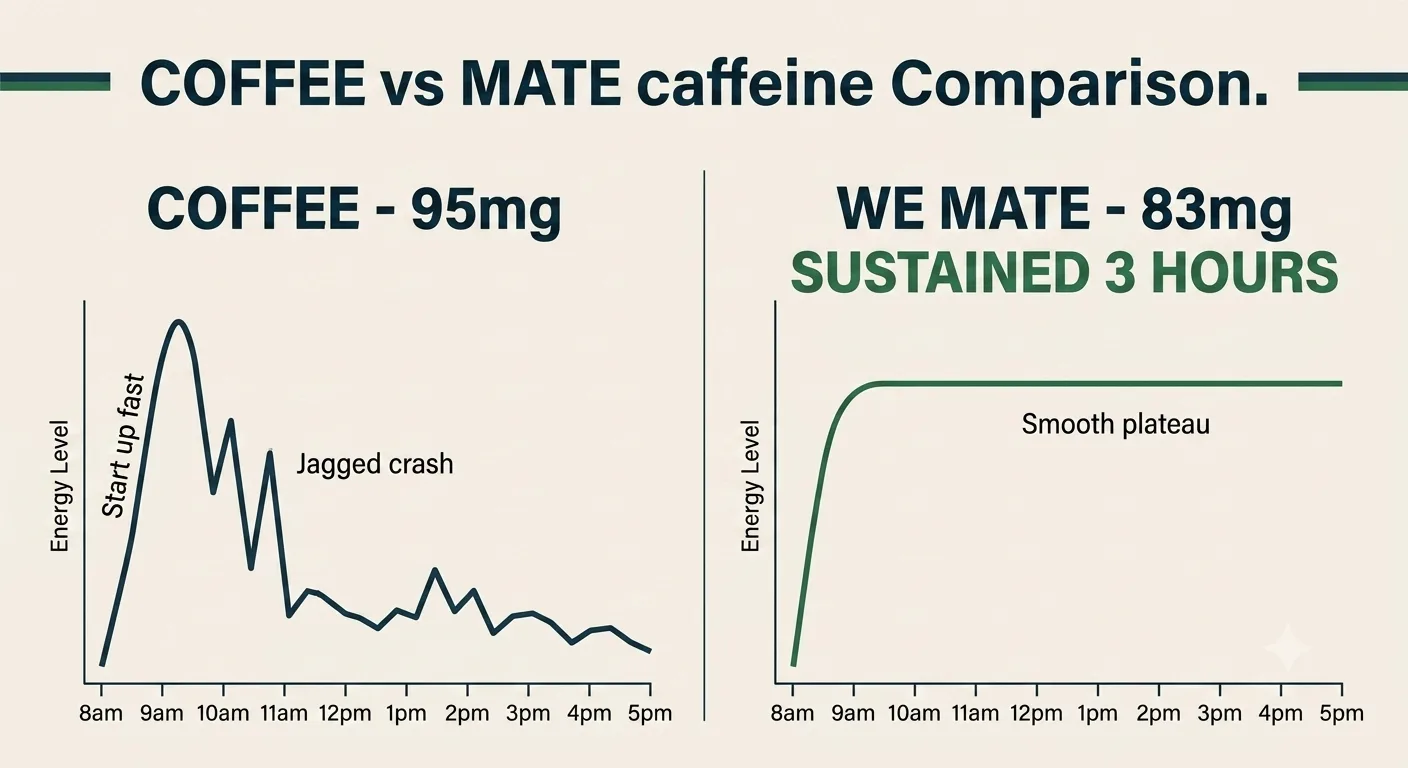
Each 330 ml can of We Mate carries the natural caffeine of yerba mate - less than a cup of coffee, more than green tea. A moderate, everyday lift.
What makes mate different isn't just the caffeine. It also contains theobromine (the same gentle stimulant found in cacao), which many people say makes the lift feel smoother and more sustained - energy without the sharp spike-and-crash of a strong espresso. Espresso at 9am, We Mate at 3pm.
Is yerba mate good for you?
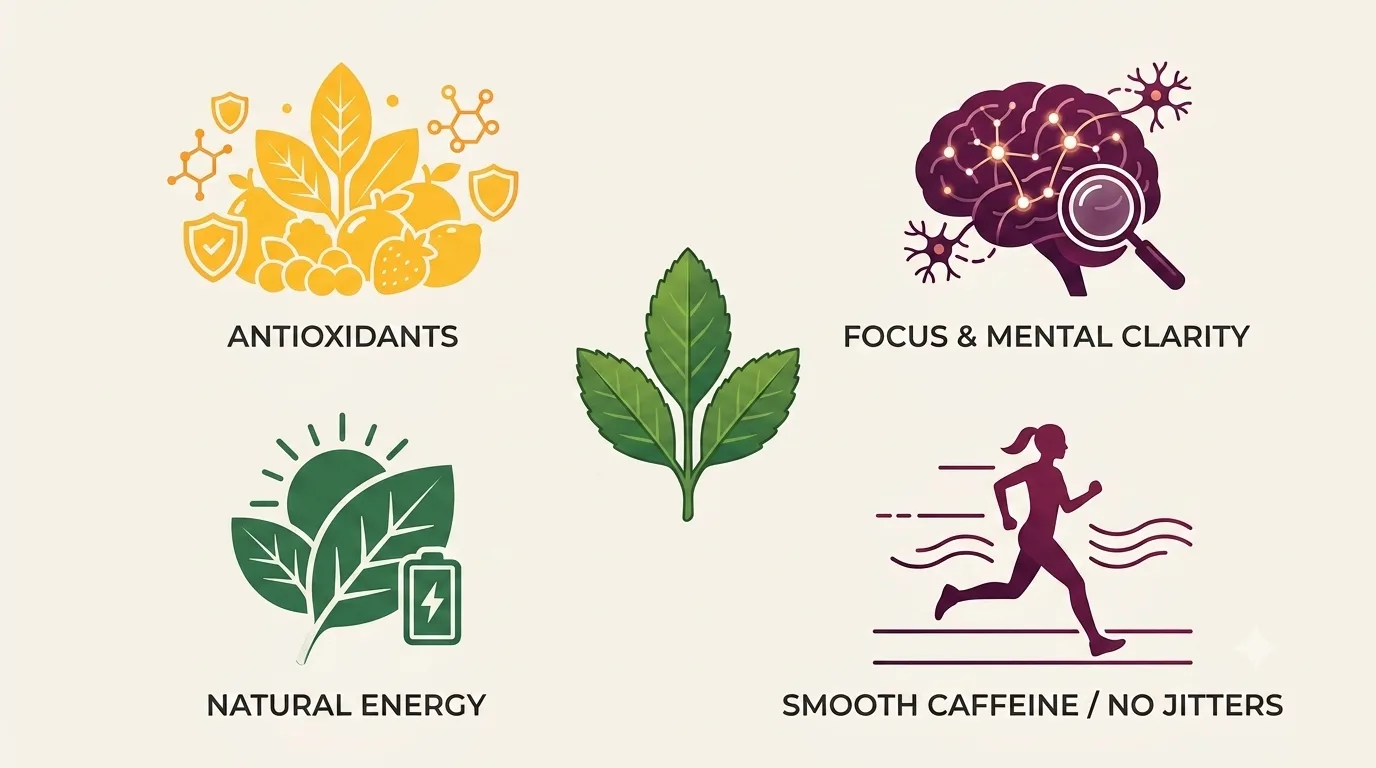
Yerba mate is naturally rich in polyphenol antioxidants and, in its pure form, contains no sugar and virtually no calories. People reach for it for clean, steady energy and focus. We Mate keeps it simple: brewed yerba mate, natural flavour and no artificial sweeteners - brown sugar in Mango and Blueberry, stevia in Citrus and Mint & Ginger. As with any caffeinated drink, moderation is sensible - especially if you're sensitive to caffeine.
How yerba mate is traditionally drunk (and the easy way)
The classic way is loose leaves in a gourd, topped with hot (not boiling) water and sipped through a bombilla, refilled again and again. It's lovely - and a bit of a ritual to set up. The modern way is to let us brew it for you: crack open a cold can, and you've got the same natural lift, ready to go.
FAQ
Is yerba mate the same as green tea? No. Both are caffeinated plant infusions, but yerba mate comes from the holly Ilex paraguariensis, while green tea comes from Camellia sinensis. Mate is earthier and usually has more caffeine.
Does yerba mate have sugar? Pure yerba mate has none. In We Mate it depends on the flavour: Citrus and Mint & Ginger have 0 g of sugars (stevia); Mango & Passion Fruit and Blueberry contain brown sugar, 4.1 g of sugars per 100 ml. No artificial sweeteners in any of them.
Does yerba mate make you jittery? Most people find the lift smoother than coffee thanks to theobromine, but caffeine affects everyone differently - go easy if you're sensitive.
Where can I try We Mate? Order it from our online shop or explore the flavours on our home page.
Is yerba mate an energy drink? No. Yerba mate is a naturally caffeinated herbal infusion, not an energy drink. We Mate brews the whole leaf for calm, steady focus, with the natural caffeine of yerba mate and no artificial sweeteners: brown sugar in Mango and Blueberry, stevia in Citrus and Mint & Ginger.