Yerba mate is no longer something you only find in Argentine and Uruguayan households in Spain. What is still rare is the other way of drinking it: the infusion already made, already cold, in a can, with no gourd and no flask. Here is where loose yerba is sold in Spain today, how it differs from a can of brewed mate, and how to get We Mate.
Where people buy yerba mate in Spain today
There are three routes, and all three lead to loose leaf. The first is the specialist online shops, which import Argentine, Uruguayan, Paraguayan and Brazilian brands and usually stock gourds, bombillas and flasks as well. The second is the neighbourhood Latin American grocer, mostly in cities with an Argentine or Uruguayan community, where yerba is picked up on the way past, like dulce de leche. The third is the large supermarket, which sometimes carries a single bag on the tea shelf, though you cannot count on it.
In all three cases what you take home is dried leaf in a half kilo or one kilo bag, to prepare yourself. Mate already brewed and ready to drink is still hard to find.
Loose leaf or brewed mate in a can
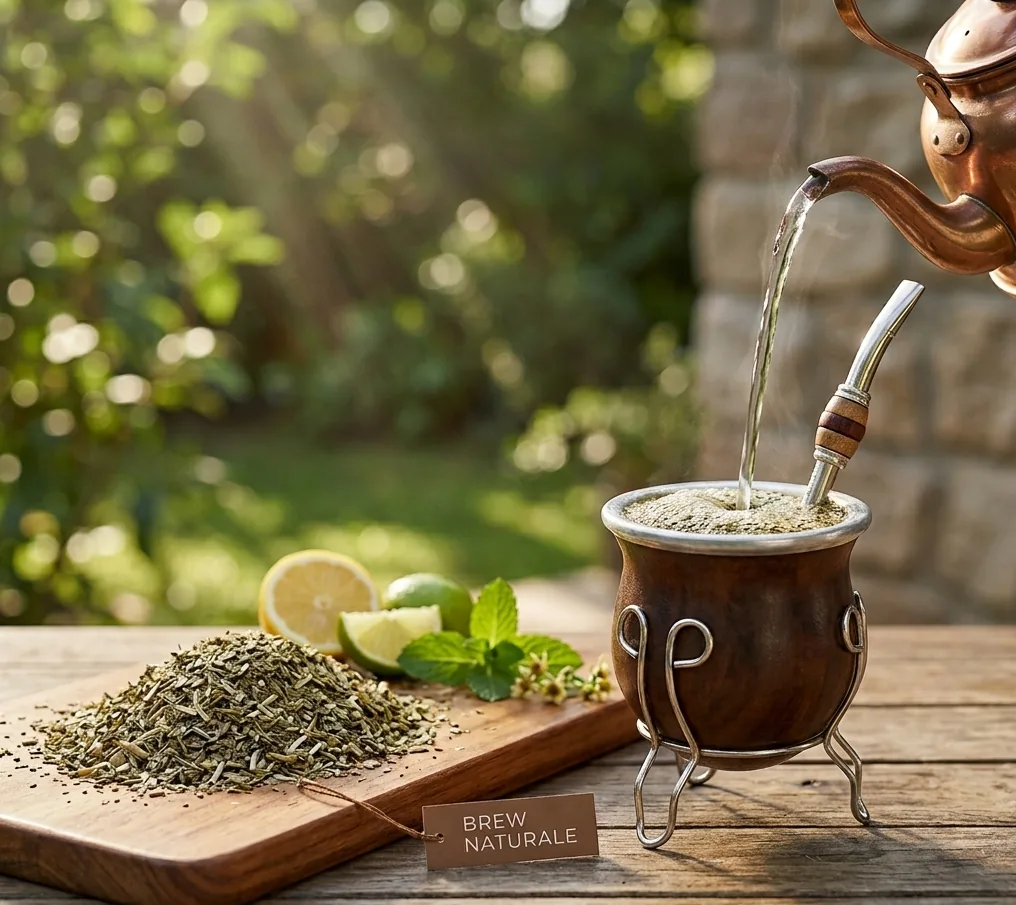
Loose leaf is the traditional way and it is still the right one if you want the whole ritual. You put the yerba in the gourd, tilt it, slide the bombilla in and pour hot water, stopping short of the boil. One gourd lasts a whole morning on refills. And it gets shared: the same bombilla goes from hand to hand, which is half the point. What it asks for is time, hot water nearby and a flask if you leave the house.
The can solves a different problem. It is the same infusion, already made and already cold, with the leaf taken out. Nothing to set up, nothing to carry. What you give up is the ritual, which for many people is exactly what they come to mate for.
They compete less than it looks. Someone who brews at home in the morning can take a can to work in the afternoon. Two forms of the same thing, each with its moment.
What We Mate is
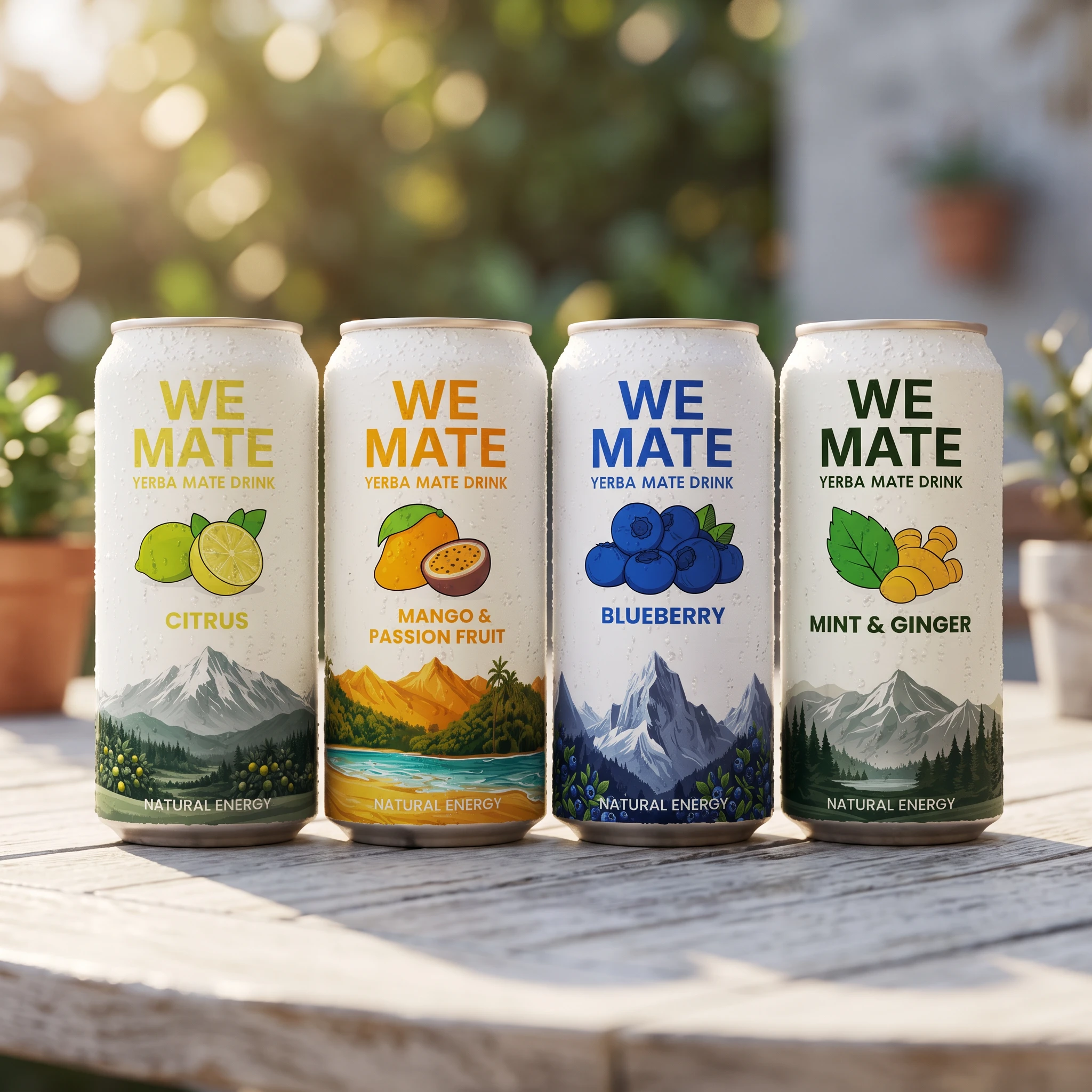
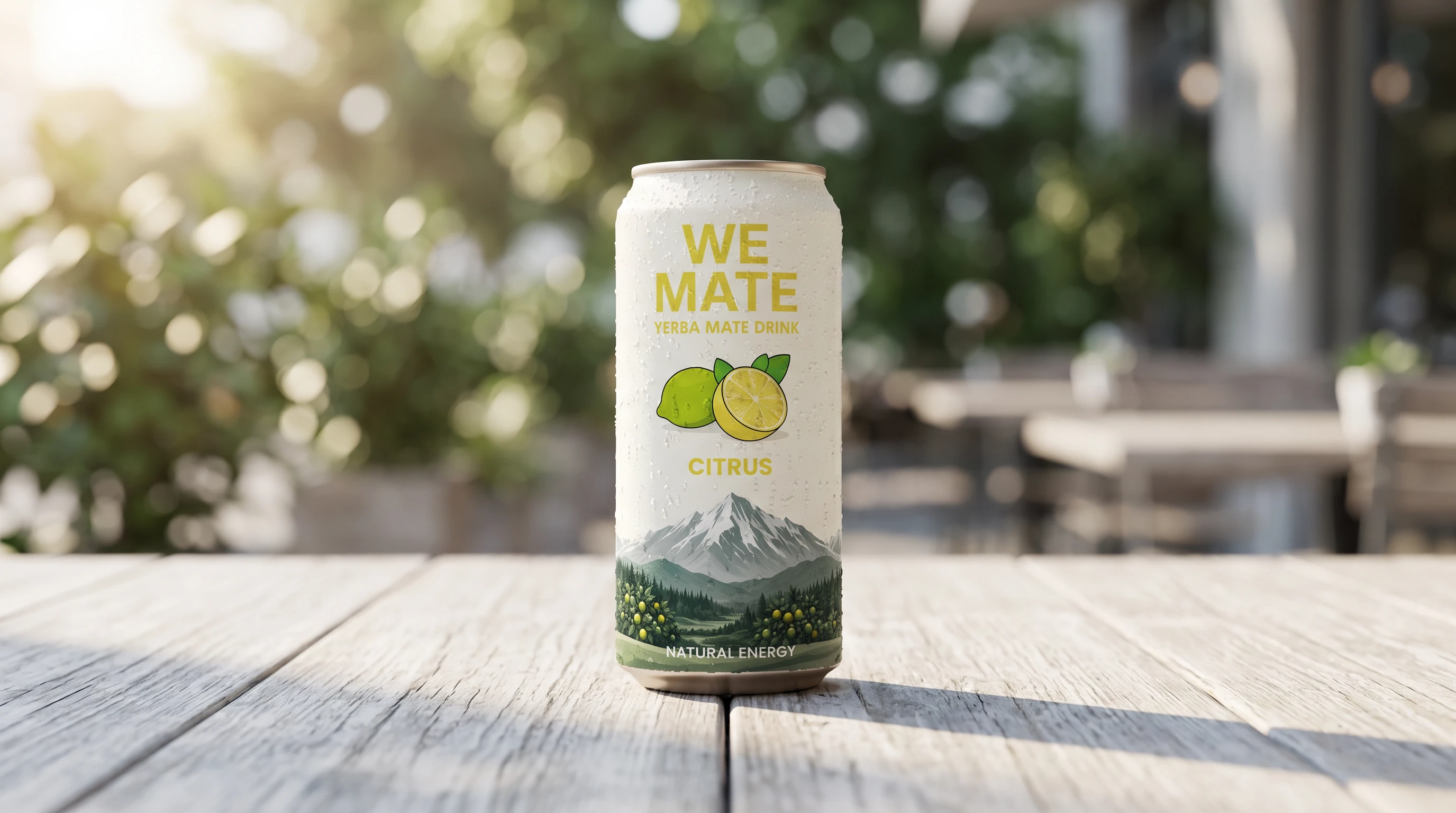
We Mate is mate brewed in Europe, in a 330 ml can. What sets it apart from most cans is how it is made: we brew the whole leaf and then take it out, instead of starting from powder extract. The full story is in whole leaf, not extract.
There are four flavours. All four carry 1.25% brewed yerba mate leaf, natural flavouring and a little carbonation. What changes between them is the sweetening:
Citrus. 0 g of sugars per 100 ml. Sweetened with stevia, with concentrated lime and lemon juice.
Mint & Ginger. 0 g of sugars per 100 ml. Stevia, with real ginger and real mint, not just flavouring.
Mango & Passion Fruit. 4.1 g of sugars per 100 ml. The sweetness comes from brown sugar and from concentrated mango juice.
Blueberry. 4.1 g of sugars per 100 ml, also from brown sugar and concentrated blueberry juice.
None of the four contains artificial sweeteners: stevia is steviol glycosides, and those come from a plant. The detail of each one is in the four We Mate flavours.
We do not publish a caffeine figure for the can. Why, and what the can does carry, is covered in the caffeine in yerba mate.
How to get We Mate in Spain
You buy it on our site, directly, with no shop in between. We are in pre-sale right now.
The Pack 12 is 24.90 EUR and carries three cans of each flavour, with 2.90 EUR shipping. The Pack 24 is 44.90 EUR, carries six of each and shipping is included. From 39 EUR, shipping is free on any order.
The pre-sale runs until 30 November. Until then the Pack 24 also includes a 25% code for your next purchase. Shipping is estimated for late 2026, when the first batch arrives, and the shop opens in December 2026 at regular price. We ship to Spain and to the rest of Europe.
FAQ
Is canned yerba mate sold in Spain? Loose leaf, yes: it is easy to find in specialist shops, Latin American grocers and some supermarkets. Already brewed and in a can, there is far less on offer. We Mate ships to Spain from its own site.
When will my order arrive? Pre-sale orders go out when the first batch arrives, with shipping estimated for late 2026. The shop opens in December 2026.
Does it contain sugar? It depends on the flavour. Citrus and Mint & Ginger have 0 g of sugars per 100 ml and are sweetened with stevia. Mango & Passion Fruit and Blueberry have 4.1 g per 100 ml, which come from brown sugar and from the fruit juice.
Is it the same as traditional yerba? Same leaf, prepared another way. Loose yerba you brew yourself in the gourd and keep refilling; the can comes already brewed and cold, with the leaf taken out. What changes is the ritual, not the plant.